Spring Fishing in Auckland: What’s Biting in the Hauraki Gulf Right Now
By Roy, skipper at Fish ‘N Dips Charters
Short answer: Spring (September through November) is one of the absolute best times of year to fish out of Auckland. As the water warms up across the Hauraki Gulf, snapper push into shallower reef ground, kingfish turn hyper-aggressive on topwater lures, and massive bird workups start firing. If you want to learn lure fishing and hook a fish you’ll remember for a lifetime, now is the time to get on the water.
I’ve fished New Zealand waters since 2003, and spring remains my favourite season to run charters in the Gulf. Here is what we’re seeing on the water, how we target these fish, and how to make the most of your trip.
Why is spring fishing so good in Auckland?
As winter fades, the Hauraki Gulf comes alive. Water temperatures rise, baitfish flood back into the inner and outer Gulf, and surface predators—along with dolphins, whales, and diving gannets—follow right behind them. That means high-action surface feeding and fish hungry in depths we can reach quickly.
Our primary vessel, Fish ‘N Dips, is a 28ft custom Westcoaster that cruises at up to 35 knots. That speed means less time travelling and more time with your lure in the strike zone.
What have we been catching lately?
October in the Gulf has been pumping. We’ve been finding massive workups firing between Tiritiri Matangi, the Noises, and out toward Motuora Island.
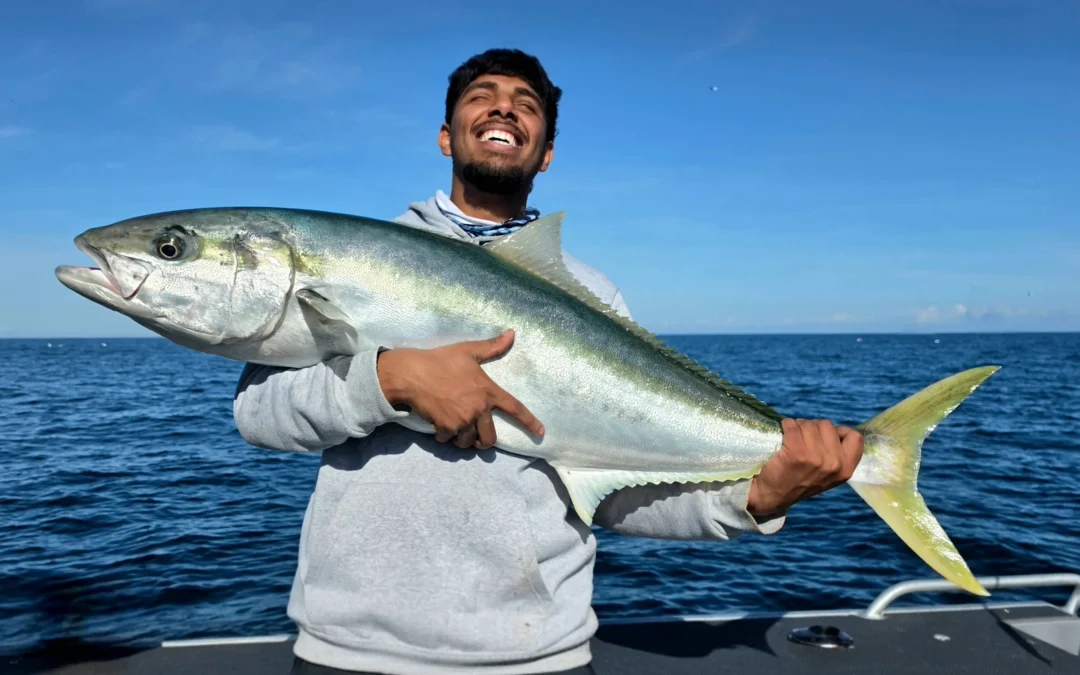
Just last week, we worked a shallow reef structure in 15 metres of water where a first-time angler landed a 14kg kingfish on a stickbait after an epic surface strike. Quality snapper in the 50cm–65cm bracket are also taking slow jigs and soft plastics on the drift around reef edges.
How do you catch snapper in spring?
In spring, larger snapper push into shallower water to feed before spawning, making them prime targets for light-tackle lure fishing. We target them using soft plastics and slow-pitch jigs.
Tips for spring snapper:
- Maintain bottom contact: Keep your lure in touch with the seabed, then lift and let it fall on a loose line—most strikes happen on the drop.
- Fish as light as possible: Use the lightest jig head conditions allow. A natural, slow sink rate gets far more bites.
- Keep boat noise down: Big spring snapper in shallow water are easily spooked. Keep quiet on deck when approaching spots.
How do you catch kingfish on lures?
Kingfish are an obsession of mine. There is nothing quite like watching a green-and-gold torpedo smash a stickbait off the surface meters from the boat. We target them with topwater stickbaits, poppers, and mechanical jigging over pinnacles, drop-offs, and island structure.
+-----------------------------------------------------------------------+
|                       SPRING KINGFISH QUICK TIPS                      |
+-----------------------------------------------------------------------+
| 1. CAST BEYOND THE ZONE  | Cast past the sign and work fast/erratic.  |
| 2. KEEP ROD TIP LOW      | Maintain tension so they can't throw hooks.|
| 3. SET A TIGHT DRAG      | Be firm early—don't let them reach rocks!  |
| 4. CARE ON RELEASE       | Wet hands, keep fish in water, return fast.|
+-----------------------------------------------------------------------+
First timer? You don’t need prior experience. I’ll teach you how to cast, work the lure, and set the hook on the day.
What is a workup and how do you fish one?
A workup is a full-scale marine feeding frenzy. Dolphins, kingfish, and kahawai push baitfish balls to the surface, while hundreds of gannets and petrels dive from above. It’s loud, fast-paced, and one of the most incredible sights in New Zealand nature.
How we fish workups safely and effectively:
- Approach quietly: We ease in slowly on the edges so we don’t scatter the bait ball.
- Target the perimeter: The biggest snapper and kingfish sit on the outside ring picking off wounded bait.
- Stay mobile: Workups shift fast—when the school drops, we reel up and reposition.
What other species can you catch in spring?
Beyond snapper and kingfish, spring charters regularly bring up heavy kahawai, gurnard, and John Dory. On our full-day offshore missions, we head wide toward Great Barrier Island or the Mokohinau Islands for deep-water species like hapuka (hapuku).
Hauraki Gulf Fishing Rules & Regulations
Rules change, so always verify limits on the MPI website or NZ Fishing Rules app prior to heading out:
| Species | Daily Limit per Person | Minimum Legal Size |
|---|---|---|
| Snapper (Auckland East Coast) | 7 | 30 cm |
| Kingfish | 3 | 75 cm |
| Combined Finfish Limit | 20 total per person | Varies by species |
Note: Saltwater recreational fishing in New Zealand does not require a licence. On our charters, we measure and verify every fish. We also follow strict Auckland Council and DOC biosecurity protocols, so please ensure your footwear and gear are clean and pest-free before stepping aboard.
What is a Fish ‘N Dips charter trip like?
- Vessel: 28ft custom Westcoaster (up to 6 guests for optimal lure casting space).
- Speed: Cruising up to 35 knots.
- Departure Point: Cracker Bay Marina, 11 Westhaven Drive, St Marys Bay, Auckland.
- Trip Types: Inshore full/half day, offshore missions, and Great Barrier Island expeditions.
- Gear Provided: High-end rod, reel, and lure setups included. Beginners fully supported.
Frequently Asked Questions
When is the best time to fish for snapper in Auckland?
Snapper are caught year-round in the Hauraki Gulf, but spring and summer offer peak activity as fish move shallower and feed aggressively.
Can beginners catch kingfish on lures?
Absolutely. We teach casting and lure retrieval on the day, and first-timers regularly hook up once they get their rhythm down.
Do I need a fishing licence?
No. New Zealand saltwater recreational fishing does not require a licence, though size and bag limits are strictly enforced.
How many people can come on a charter?
Fish ‘N Dips takes up to 6 guests for private lure fishing trips. For larger corporate or group bookings of 7 to 14+ anglers, we run our larger vessel Triton or offer multi-boat charter setups.
What should I bring?
Warm layers, a wind/waterproof jacket, sunscreen, non-marking deck shoes, and your food/drinks. We supply all fishing tackle, rods, and lures.
Ready to get on the water?
Spring weekend dates fill quickly. Check out our charter options and pricing or get in touch directly:
- Phone: 022 4623 447
- Email: info@fishndips.co.nz
- Location: Cracker Bay Marina, Westhaven, Auckland