Hauraki Gulf Winter Fishing Feels Like Spring!
Why This August’s Workups Have Us Fishing in Shorts, Not Wet-Weather Gear
If you’d blindfolded us and dropped us on the water this month, we’d have sworn it was October. The amount of bait that’s poured into the Gulf this winter has been nothing short of absolutely mental, and it’s turned what’s usually a quiet, rug-up-and-grind kind of month into some of the best action we’ve seen in years. Here’s the full rundown from the deck of Fish ‘N Dips this August.
An Unreal Amount of Bait Has Flooded the Gulf This Winter
Normally by August, the bait schools inshore have thinned right out, and you’re working hard for every workup you find. Not this year. Pilchards and jack mackerel have flooded into the Hauraki Gulf in numbers we’d expect to see at the peak of spring, and the food chain has responded in full force.
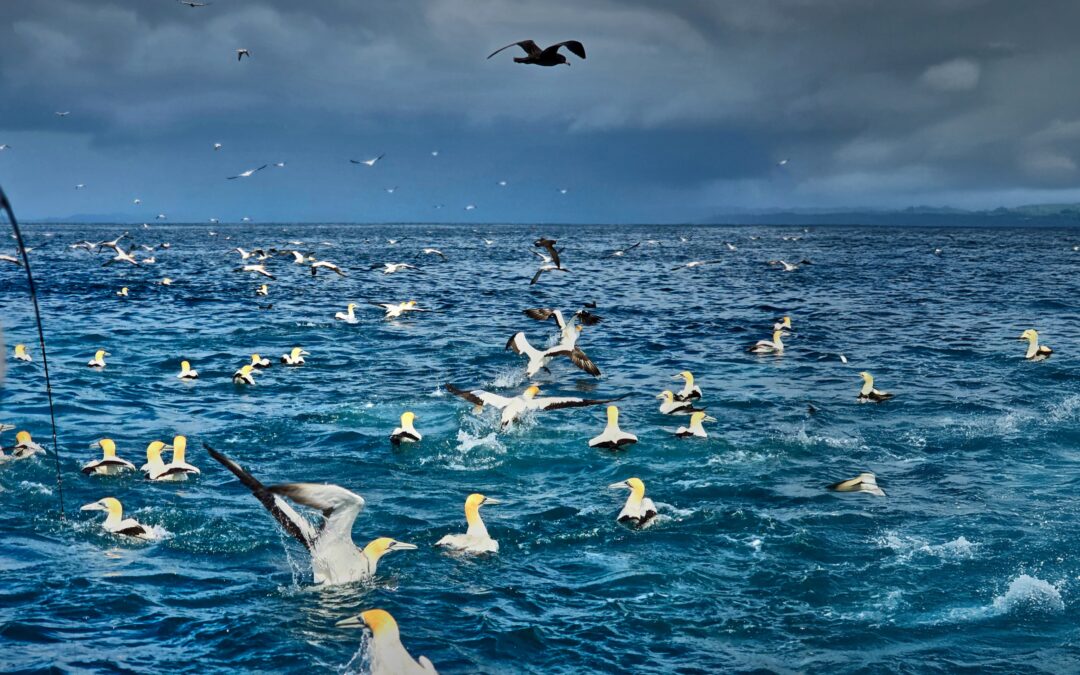
Everything from whales and kingfish to diving gannets is stacked on top of the bait. We’ve even watched dolphins feeding in such aggressive modes that the gannets are terrified to dive in! It’s been unreal to experience, and we’ve filmed plenty of exciting footage to share with you all.
This kind of bait density this deep into winter, very close to Auckland, isn’t normal, and it’s the single biggest reason this month has fished the way it has. When there’s this much life in the water column, predatory fish don’t need to move far or work hard to eat, which means they’re aggressive, grouped up, and right there when you arrive.
Workups That Feel Like October, Not August
We’ve said it to every angler who’s stepped onboard this month: these are spring-quality workups in the middle of winter.
Imagine big, boiling patches of white water, diving gannets stacked three-deep in the air, plus whales and dolphins smashing bait right on the surface. It’s the kind of scene that normally has us grinning in October, not August.
If you’ve been wondering when the best time to fish the Hauraki Gulf in winter is, this August is genuinely rewriting the rulebook. The workups have been consistent, easy to spot from a distance, and most importantly, holding quality fish underneath—giving you a front-row seat to one of nature’s most spectacular shows!
Whales on the Water — A Daily Sight This Winter
It hasn’t just been the fishing turning heads this month. We’ve had whales in sight on the water almost every single trip, and it’s become as much a part of the August experience as the workups themselves.
Seeing them surface and blow nearby while working a bait school is a proper reminder of just how much life the Hauraki Gulf is currently holding. The same bait boom drawing in the kingfish and workups is keeping the whales around, too. For anyone chasing a Hauraki Gulf fishing and wildlife charter this winter, this month has delivered both in spades.
Fat, Hard-Fighting Kingfish Under Every Workup
Drop any jig under one of these workups this month, and there’s a very good chance something properly big is going to eat it. The kingfish we’ve been pulling out from under the winter workups have been in prime condition—fat, deep-shouldered fish that have been gorging on all this bait and pulling drag like it’s the middle of summer.
For anyone chasing a winter kingfish fishing charter in Auckland, this is exactly the pattern you want: locate the workup, get your jigs down through the school, and hold on. We’ve had anglers of all experience levels connect to solid kingies this month simply because the fish are that switched on.
Jigging Tactics — Micro Jigging, Slow Pitch, and Mechanical Jigging for Winter Kingfish
This month has also been an outstanding one for jigging kingfish on light gear, and on the calmer days we’ve had plenty of chances to put it into practice.
Micro Jigging on the Calm Days
When the Gulf lays down flat, micro-jigging has been deadly. Light jigs in the 40–80g range, fished on light spin or overhead outfits, let you work the whole water column and stay in direct contact with your lure—you feel every single knock rather than guessing at it.
- The Retrieve: The key on calm days is a slower, erratic lift-and-fall retrieve rather than a fast mechanical pump. With so much bait in the water, a subtle, natural flutter consistently out-fishes anything too aggressive.
- The Action: Light gear ensures every kingfish that eats one of these micro-jigs turns into a proper fight—full of long runs, heavy headshakes, and none of that “winch it up” feeling you get on heavy tackle.
Slow Pitch Jigging Through the Water Column
Slow pitch has been the other standout technique this month, especially over structure and deeper edges where kingfish hold under the bait schools.
The goal is to work the jig methodically through the entire water column. Short pitches of the rod tip make the jig flutter and glide sideways on the drop rather than falling straight down. This presents the lure to fish sitting anywhere from right under the boat to the bottom, not just those pinned tight to structure.
It’s a finesse technique, but don’t let that fool you—some of the biggest, fattest kingfish we’ve boated this month have come on a slow pitch jig worked patiently through the strike zone rather than smashed through it.
Mechanical Jigging — Still Our Most Productive Method
On days with a bit more breeze—or when we need to cover the water fast and get straight down to deep-holding fish—mechanical jigging remains our most productive approach. A fast, rhythmic wind-and-pump straight up through the school triggers reaction strikes even from fish that aren’t actively feeding. It’s been responsible for the bulk of our bigger kingfish this month.
If you’re new to jigging and want the highest strike rate with the least technical finesse, this is usually where we start you.
Matching the technique to the conditions has been the key to keeping rods bent every single trip:
- Mechanical jigging: Quick results when fish are deep or conditions drift fast.
- Micro-jigging: Finesse on calm days.
- Slow pitch: Methodical coverage through the whole water column.
The Bycatch Has Been Off the Charts Too
It hasn’t just been a one-species show, either. With this much life stacked up in the water column, we’ve been pulling a wide mix over the rail—snapper, kahawai, trevally, gurnard, and more have all hit the deck on the very same trips as the kingfish.
When the bait is this thick, the whole ecosystem shows up to the party. That kind of diversity has made every single drop feel like a proper lucky dip in the best possible way!
A John Dory on Every Single Trip
Here’s the stat that surprised even us: we’ve boated at least one John Dory on every single trip this month. Not most trips—every trip!
For a species that’s normally a welcome bonus rather than a given, seeing John Dory show up with this kind of consistency proves just how rich the Hauraki Gulf is right now.
If you’ve been searching for John Dory fishing in Auckland or wondering where to find them this winter, the answer is simple: fish where the bait is. That’s exactly where these prized eaters have been waiting.
What This Means for Booking Your Next Charter
Winter fishing charters in the Hauraki Gulf don’t usually come with this kind of action, but conditions like this don’t last forever. Spring is just around the corner, and things are about to get even better.
If you’ve been sitting on the fence about booking a Hauraki Gulf fishing charter this month, now is genuinely the time to get out on the water. Check our live availability online, grab your spot, and come experience an August workup season for yourself!
Ready to get amongst it? Get in touch with Fish n Dips Charters to book your Hauraki Gulf winter fishing charter while the workups are still firing.